
Is Freezing Your Credit Worth It? The Final Answer After Everything You’ve Learned
Blog post description.
1/22/20263 min read
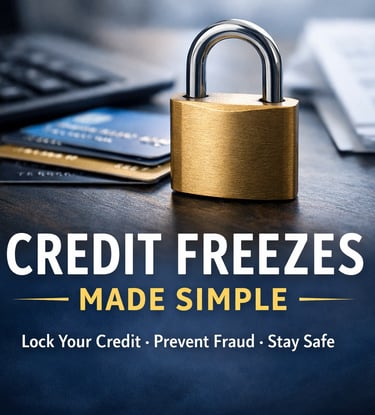
Is Freezing Your Credit Worth It? The Final Answer After Everything You’ve Learned
After reading guides, comparisons, warnings, and advice, most people arrive at one final question:
Is freezing your credit really worth it?
Not in theory.
Not in fear-based headlines.
But in real life — with real trade-offs, real risks, and real outcomes.
This article gives you the final, honest answer, based on everything that actually matters.
Why This Question Comes Up at the End (Not the Beginning)
People rarely ask this question at first.
At the beginning, they ask:
“What is a credit freeze?”
“How does it work?”
“Will it hurt my credit score?”
Only later — after understanding the system — do they ask the right question:
👉 Is this actually worth doing long-term?
That’s the question we answer here.
What “Worth It” Really Means in This Context
“Worth it” doesn’t mean:
Zero effort
Zero thought
Zero inconvenience
It means:
Does the benefit outweigh the cost?
Does it reduce real risk?
Does it simplify life over time?
So let’s evaluate it honestly.
The Real Cost of Freezing Your Credit
Let’s start with the downsides — clearly and without exaggeration.
Freezing your credit costs you:
About 30–45 minutes once
A few minutes when you apply for new credit
The need to remember it exists
That’s it.
There are:
No fees
No score penalties
No daily maintenance
No subscriptions
The cost is time and intention, not money.
The Real Cost of NOT Freezing Your Credit
Now compare that to the alternative.
When credit fraud happens, people face:
Months of disputes
Paperwork and phone calls
Stress and anxiety
Credit score damage
Delayed loans or housing
Loss of trust in systems
Even a “small” fraud case often costs dozens of hours to resolve.
Some cost years.
The Risk You’re Actually Managing
This is critical:
Freezing your credit is not about paranoia.
It’s about one specific risk:
👉 New credit accounts opened in your name without your consent.
That risk:
Is common
Is hard to undo
Causes long-term damage
Depends entirely on credit access
Freezing your credit directly targets that risk.
Why “Being Careful” Is No Longer Enough
Many people say:
“I’m careful online”
“I don’t click links”
“I monitor my accounts”
All of that can be true — and still fail.
Because:
Most identity theft starts with data breaches
You don’t control who stores your SSN
Exposure happens passively
Freezing credit doesn’t depend on secrecy.
It depends on control.
The Key Insight Most People Miss
Here’s the insight that changes everything:
👉 You don’t use new credit very often.
Think about it honestly.
Most adults:
Open new credit accounts rarely
Apply for loans years apart
Live most of life without needing credit access
So why leave credit open every day, for something you use occasionally?
The Default-Frozen Model (Why It Makes Sense)
The smartest model is simple:
Credit is frozen by default
You open it temporarily when you need it
You close it again immediately
This mirrors how we treat:
Homes (locked unless entering)
Phones (locked unless used)
Accounts (protected unless accessed)
Credit is no different — it’s just been treated differently for historical reasons.
Why Freezing Credit Gets Easier Over Time
The first time feels unfamiliar.
After that:
Lifts take minutes
Decisions become automatic
Anxiety drops
Confidence rises
Most people who freeze their credit say the same thing later:
“I wish I had done this sooner.”
Who Freezing Credit Is Definitely Worth It For
Freezing your credit is especially worth it if:
You’re not applying for credit right now
You’ve ever been in a data breach (most people)
You have good or established credit
You want long-term peace of mind
You don’t want monthly fees
That describes most U.S. adults.
Who Might Delay (But Rarely Should Avoid It)
You might delay freezing if:
You’re in the middle of multiple applications
You’re actively rebuilding credit this month
Even then:
Freeze immediately afterward
Avoiding freezing entirely is rarely justified.
The Psychological Benefit Nobody Talks About
Freezing your credit:
Removes constant “what if” thinking
Reduces breach anxiety
Ends the need to constantly monitor
Restores a sense of control
Security that works silently is powerful.
The Biggest Regret People Share
When asked what they regret, identity theft victims rarely say:
“I froze my credit too early”
They almost always say:
“I didn’t freeze it sooner”
“I thought monitoring was enough”
“I didn’t know this was free”
That regret pattern is very consistent.
Why Credit Freezes Are Becoming the New Normal
As breaches increase and automation accelerates:
Prevention beats reaction
Blocking access beats watching alerts
Passive security beats constant vigilance
Credit freezes align perfectly with this shift.
They are not extreme anymore.
They are practical.
So… Is Freezing Your Credit Worth It?
Here’s the final, honest answer:
👉 Yes — for most people, it’s one of the highest-value protective actions you can take.
Low cost.
High impact.
Long-term benefit.
Very few actions offer that ratio.
A Simple Rule to End the Debate Forever
Use this rule:
If you don’t need new credit today, your credit should be frozen today.
That rule answers the question every single day — without overthinking.
Final Takeaway
Freezing your credit is not about fear.
It’s about:
Control
Efficiency
Long-term protection
Once you understand the system, the decision becomes obvious.
👉 Ready to Do This the Right Way — Once?
This article gives the final answer on whether freezing your credit is worth it.
Our complete guide walks you step by step through freezing, managing, lifting, and protecting your credit long-term, without mistakes or confusion.
🔒 Freeze Your Credit Now – Download the Complete Guide https://freezemycreditusa.com/credit-freezes-guide
Help
Questions? Reach out anytime.
Contact
infoebookusa@aol.com
© 2026. All rights reserved.